Chapter 2 Particle Size and Particle Size Distribution
📘 Chapter 2
Particle Size and Particle Size Distribution
2.1 Importance of Particle Size in Mineral Processing
In mineral processing, particle size plays a crucial role in almost every unit operation. The efficiency of crushing, grinding, classification, flotation, gravity separation, and thickening depends strongly on particle size.
If particles are too coarse, valuable minerals remain locked and separation becomes ineffective. If particles are too fine, excessive slimes are produced, which reduce separation efficiency and increase processing cost.
Therefore, controlling and understanding particle size is fundamental to mineral processing.
2.2 Definition of Particle Size
Mineral particles are irregular in shape. Hence, particle size cannot be defined using a simple geometric dimension.
Practical Definition
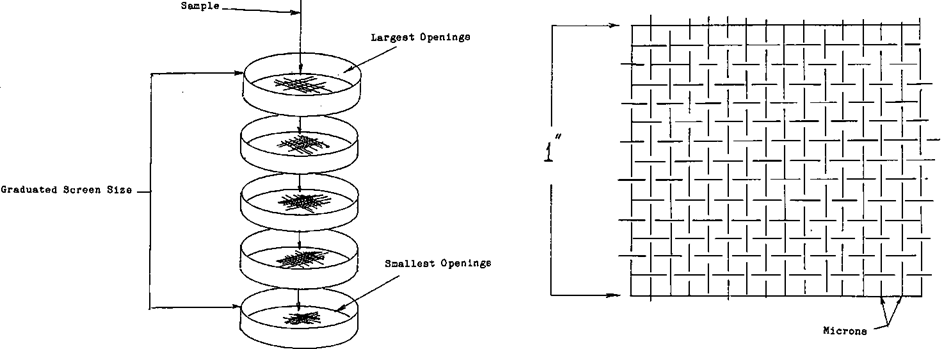
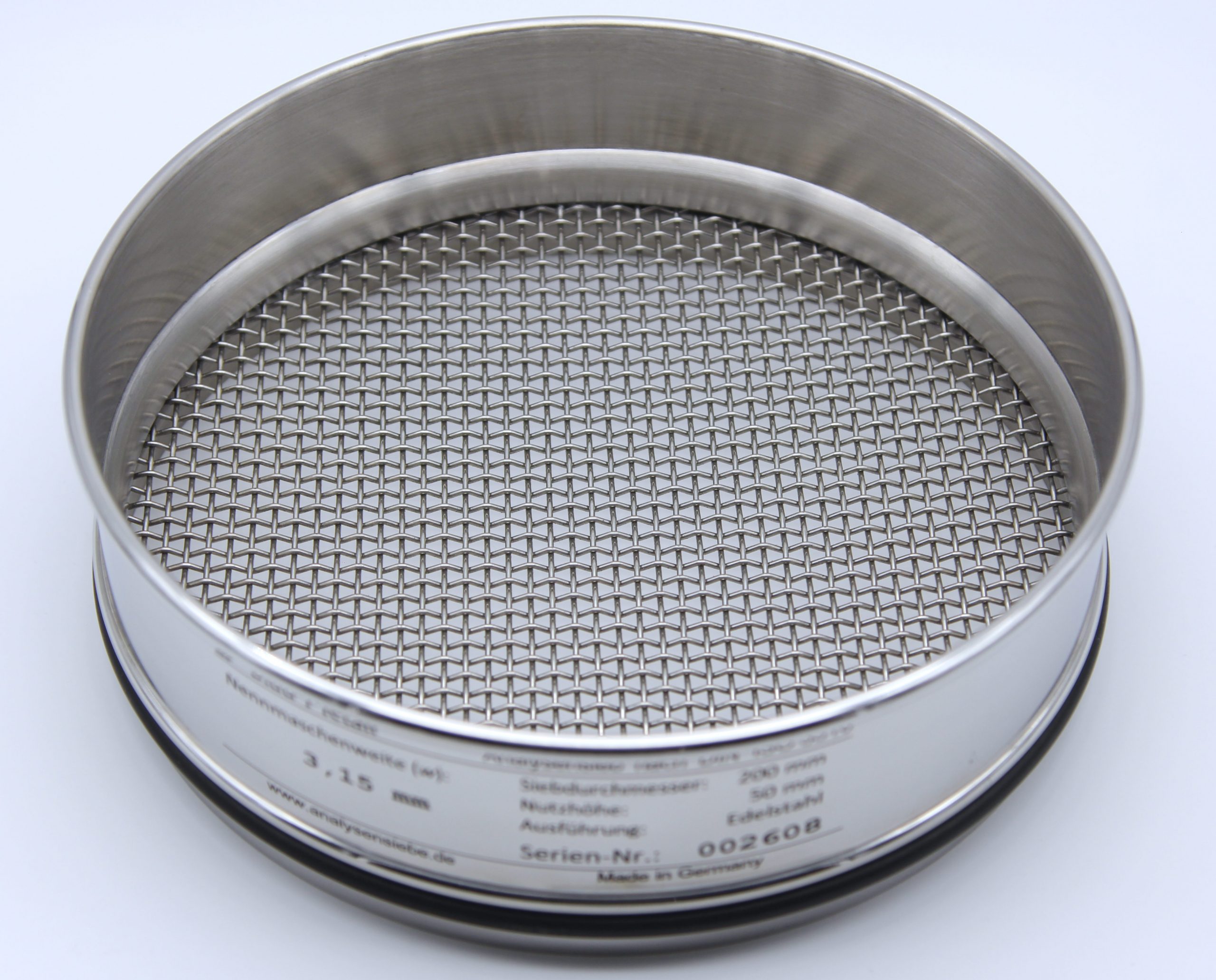
Particle size is defined as the smallest square sieve opening through which a particle can pass.
This definition is widely used in mineral processing because it is practical and measurable.

2.3 Particle Size Distribution (PSD)
Definition
Particle Size Distribution (PSD) describes how the total mass of material is distributed among different particle sizes.
PSD provides information about:
Coarseness or fineness of material
Effectiveness of size reduction
Suitability of material for downstream separation processes
2.4 Types of Particle Size Distributions
1. Cumulative Size Distribution
Shows the percentage of material finer than a given size.
Example:
If 70% is passing 1 mm, then 70% of particles are smaller than 1 mm.
2. Differential Size Distribution
Shows the mass fraction present in each size interval.


2.5 Graphical Representation of PSD
Particle size distributions are usually plotted with:
Particle size on the horizontal axis (logarithmic scale)
Percentage passing on the vertical axis
Logarithmic scale is used because particle sizes vary over a wide range.

2.6 Size Classes
For modeling and simulation, the continuous size range is divided into discrete size classes.
Each size class represents particles within a specific size interval.
Example of Size Classes
| Size Class | Size Range (mm) |
|---|---|
| 1 | > 10 |
| 2 | 10 – 5 |
| 3 | 5 – 2.5 |
| 4 | 2.5 – 1.25 |
| 5 | < 1.25 |
Particles within the same size class are assumed to behave similarly.
2.7 Empirical Size Distribution Models
Experimental PSD data are often represented using empirical equations. These equations simplify analysis and are commonly used in examinations and simulations.
2.8 Rosin–Rammler Size Distribution
Equation

Where:


2.9 Physical Meaning of Rosin–Rammler Parameters
D₆₃.₂
Characteristic size of the distribution
Indicates the general fineness of material
λ (Lambda)
Indicates the spread of the size distribution
Higher λ → narrow distribution
Lower λ → wide distribution


2.10 Solved Numerical Problem
Problem
A crusher product follows Rosin–Rammler distribution with:
(D_{63.2} = 40 , \text{mm}), (\lambda = 2)
Calculate the percentage of material smaller than 20 mm.
Solution

Answer
22.2% of the material is smaller than 20 mm
2.11 Importance of PSD in Modeling and Simulation
In mineral processing simulation:
Each stream is defined by flow rate and PSD
Unit operations modify the PSD
Output PSD becomes input to downstream units
Thus, PSD is a fundamental input and output parameter in simulation software such as MODSIM.
2.12 Summary
Particle size controls mineral processing performance
PSD describes the distribution of particle sizes
Cumulative PSD is widely used
Rosin–Rammler equation is commonly applied
PSD is essential for modeling and simulation
2.13 Important Examination Questions
Define particle size distribution
Explain cumulative and differential PSD
Explain Rosin–Rammler size distribution
Define (D_{63.2} and (\lambda)
Solve numerical problems using Rosin–Rammler equation


Comments
Post a Comment