Simulators Available in Mineral Processing
List the types of standard simulators available in mineral processing and their features. (p. 353–355)

Types of Standard Simulators Available in Mineral Processing and Their Features
Simulators are essential tools in mineral processing, used to design, analyze, and optimize plant operations. These simulators incorporate mathematical models to mimic the performance of various unit operations and provide insights into plant behavior under different conditions. Below are the standard simulators commonly used in mineral processing and their features:
1. MODSIM
Description:
MODSIM is a general-purpose process simulator designed for modeling and simulation of mineral processing plants.
Features:
- Flowsheet-Based Design:
- Allows the creation of detailed plant flowsheets using a drag-and-drop interface.
- Comprehensive Unit Operation Models:
- Includes models for comminution (crushers, mills), classification (screens, hydrocyclones), and separation (flotation, gravity, magnetic).
- Data Integration:
- Supports the integration of experimental data and plant performance data for accurate calibration.
- Mass and Energy Balance Calculations:
- Performs detailed mass and energy balance calculations across the flowsheet.
- Customization:
- Users can create and add custom unit operation models.
2. JKSimMet
Description:
JKSimMet is a specialized simulator for modeling comminution and classification circuits in mineral processing.
Features:
- Specialized in Comminution:
- Focuses on ball mills, SAG mills, and hydrocyclones for grinding and classification.
- Breakage and Selection Function Integration:
- Incorporates detailed breakage and selection function models for particle size analysis.
- User-Friendly Interface:
- Provides an intuitive interface for flowsheet creation and parameter adjustments.
- Simulation and Optimization:
- Enables circuit optimization by evaluating different configurations and operating conditions.
- Graphical Outputs:
- Offers detailed graphical representation of circuit performance (e.g., size distribution, throughput).
3. HSC Chemistry
Description:
HSC Chemistry is a process modeling software used for thermodynamic calculations and process optimization in mineral processing and metallurgy.
Features:
- Thermodynamic Databases:
- Contains extensive thermodynamic data for mineral processing and metallurgical reactions.
- Process Simulation:
- Simulates chemical and mineralogical transformations in processing circuits.
- Flowsheet Design:
- Provides tools for creating and analyzing plant flowsheets.
- Energy and Mass Balances:
- Performs detailed energy and mass balance calculations for the entire plant.
- Advanced Tools:
- Includes tools for kinetics modeling, reaction heat calculations, and process optimization.
4. NIAflow
Description:
NIAflow is a simulation software for aggregates, mining, and mineral processing plants, focusing on material flow and equipment utilization.
Features:
- User-Friendly Interface:
- Drag-and-drop functionality for designing and simulating plant flowsheets.
- Wide Range of Equipment Models:
- Covers crushing, screening, grinding, classification, and separation units.
- Real-Time Mass Balances:
- Provides real-time calculations of mass flow rates, particle size distributions, and equipment utilization.
- Graphical Representation:
- Visualizes the flow of material and performance of equipment in the plant.
- Versatility:
- Suitable for both aggregates and mineral processing industries.
5. METSIM
Description:
METSIM is a process simulation software used for metallurgical and mineral processing applications.
Features:
- Comprehensive Unit Operation Models:
- Includes models for crushing, grinding, flotation, leaching, and smelting.
- Detailed Energy and Mass Balances:
- Tracks energy and material flows throughout the processing circuit.
- Cost Analysis:
- Integrates cost analysis tools for operational and capital expense estimation.
- Flexibility:
- Supports a wide range of processes, from hydrometallurgy to pyrometallurgy.
Comparison of Simulators
| Simulator | Specialization | Key Features |
|---|---|---|
| MODSIM | General-purpose | Flowsheet design, mass/energy balance |
| JKSimMet | Comminution and classification | Breakage/selection functions, grinding circuits |
| HSC Chemistry | Thermodynamics and reactions | Thermodynamic databases, reaction modeling |
| NIAflow | Aggregates and material flow | Real-time mass balances, drag-and-drop interface |
| METSIM | Metallurgy and mineral processing | Cost analysis, hydrometallurgy/pyrometallurgy |
Conclusion

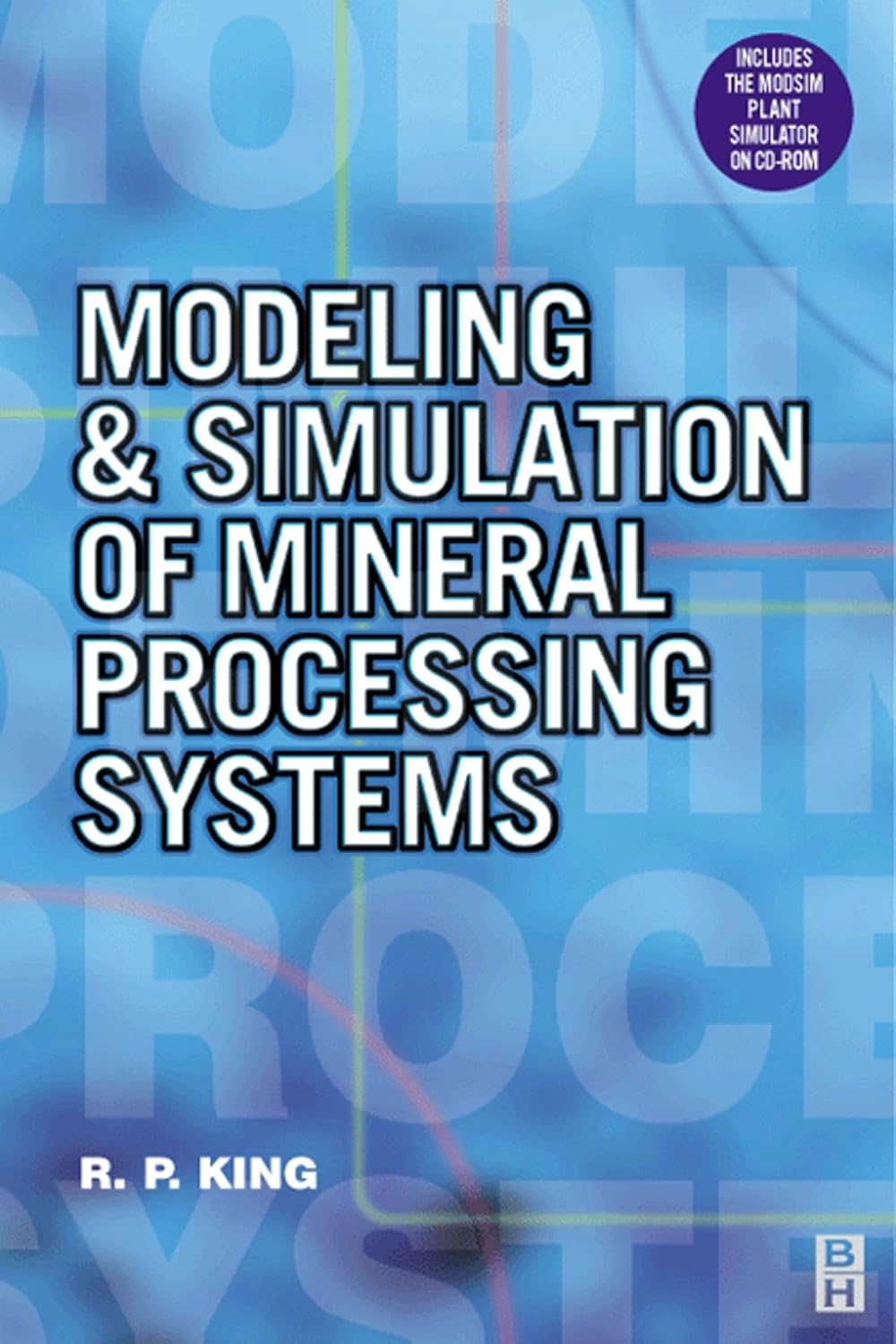
Reference: R.P. King, Modeling and Simulation of Mineral Processing Systems, p. 353–355.


Comments
Post a Comment